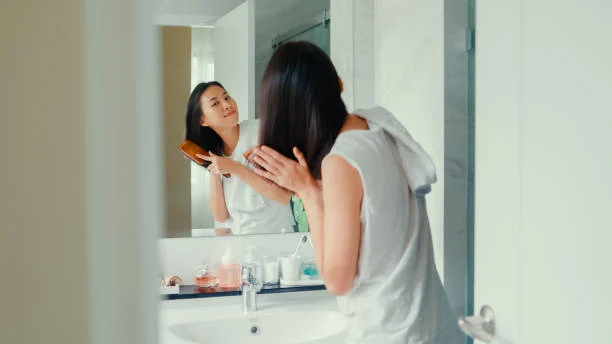
You can switch shampoos, buy pricier detergent, and overhaul your skincare routine, and still feel like something is off. Your skin stays tight and itchy after every shower, your hair looks dull no matter what you put on it, and your “clean” towels feel scratchy and tired. For many Southwest Florida homeowners, the missing piece isn’t in the bottle on the shelf. It is in the water coming out of the tap.
At Waterbird Home Solutions, water quality is not an afterthought. With three generations of plumbing and water experience, we look at every home through a health lens first. We work in Bonita Springs and across Lee County every day, and we see how the local water profile can quietly affect skin, hair, laundry, and even the plumbing and appliances behind the walls.
Once you understand how your water behaves, the problems you are seeing in the mirror and in the laundry basket start to make a lot more sense.
What Water Quality Actually Means for Your Home
When we talk about “water quality” in a home, we are really talking about two different things that often get lumped together: minerals and disinfectants.
Mineral hardness is the amount of calcium and magnesium dissolved in your water. It is usually measured as water hardness in grains per gallon or in milligrams per liter (mg/L). These minerals are naturally present in Southwest Florida because our groundwater flows through limestone and ancient coral reef formations, which release calcium and magnesium into the supply.
Disinfectant chemistry is what the utility adds to keep your water microbiologically safe. In Bonita Springs, that is not plain chlorine. Bonita Springs Utilities (BSU) uses monochloramine, which is a combination of chlorine and ammonia, as the primary disinfectant.
Those two factors, minerals and disinfectants, behave differently on your skin, hair, and clothes. They also call for different treatment approaches.
BSU uses a process called lime softening to reduce hardness before water reaches your home. That treatment definitely helps, but it does not remove minerals entirely. BSU reports hardness in the Bonita Springs service area in the range of 80 to 100 mg/L, or about 5 to 6 grains per gallon. That level is often described as soft to borderline hard, yet it is still enough to create scale buildup and to react with soap in everyday use.
If your home has older pipes or fixtures, those minerals can accumulate, so the water you actually feel in the shower may be harsher than the numbers on a city report suggest.
What Hard Water Does to Your Skin
If you step out of a shower and your skin feels dry, tight, or itchy within minutes, there is a good chance your water is part of the story.
Hardness minerals like calcium and magnesium ions do not play nicely with regular soap. Instead of rinsing clean, they bind with the soap to form a residue commonly called soap scum. That same cloudy film you see on shower doors can also end up on your skin.
This residue clings to the surface, blocks pores, and interferes with the skin’s natural oils. Your skin moisture barrier, which is the thin layer that keeps water in and irritants out, can start to break down. The result is dryness, flaking, and that “squeaky clean” feeling that actually means your natural oils have been stripped away.
For people with eczema, psoriasis, or generally sensitive skin, that mineral film can make things worse. The combination of dryness, irritation, and mild surface inflammation may trigger more frequent or more intense flares. Over time, ongoing oxidative stress from mineral interactions may also contribute to visible aging by affecting collagen, even if you are doing everything “right” with moisturizers and sun protection.
In Bonita Springs, disinfectant chemistry adds another layer. Monochloramine is designed to be stable in the distribution system, which means small amounts can still be present when you shower. Like chlorine, monochloramine can strip some of the skin’s natural oils. When you pair that with mineral hardness, you get a double hit to your moisture barrier that lotions alone can struggle to fix.
What Hard Water Does to Your Hair
Hair has its own version of a moisture barrier. Each strand is covered by a protective outer layer called the cuticle, built from overlapping scales. When that cuticle is smooth and intact, hair looks shiny, feels soft, and resists tangling.
Hard water minerals tend to latch onto that cuticle. Over time, calcium and magnesium form a thin, gritty coating on the hair shaft. This buildup blocks moisture and conditioners from penetrating, so even rich products can leave hair feeling dry or straw-like.
The results show up in familiar ways: dullness, frizz, split ends, and tangles that seem to appear no matter how carefully you brush or which conditioner you buy. You may also notice that your hair never quite feels rinsed, or that it takes much longer to lather shampoo than it used to.
The scalp is affected too. Mineral deposits and leftover soap can sit on the skin, disrupting the natural balance of oils. That can mimic or aggravate dandruff, with flakes and itching that clarifying shampoos only quiet for a few days at a time.
If your hair is color treated, the impact is even more noticeable. When hardness minerals build up, they roughen the cuticle scales. That rough surface lets color molecules escape more quickly, so salon color fades, looks brassy, or shifts tone far sooner than you would like. You end up scheduling touch-ups more often and still feeling like your color never looks quite as fresh as it should.
What Hard Water Does to Your Laundry and Your Washer
The same mineral behavior that bothers your skin and hair can quietly sabotage your laundry routine.
Laundry detergents are formulated to grab onto dirt and oils so they can be rinsed away. In hard water, a significant portion of each detergent dose reacts with calcium and magnesium instead. Those reactions create a residue that does not clean anything. It just uses up cleaning power.
That means you may be paying for detergent that never truly reaches your clothes. To compensate, many people add more soap, switch brands, or run extra rinse cycles, all of which increase cost and water use without fixing the root cause.
- Dingy whites and faded colors. As hardness minerals interact with detergent, tiny particles can get trapped in fabric fibers. Whites start to look gray or yellowed, and colors lose their brightness more quickly.
- Stiff, rough fabrics. Towels and sheets washed again and again in mineral-heavy water often feel stiff, even straight from the dryer. That stiffness is partly due to residual minerals left in the fibers.
- Persistent odors. When detergent cannot fully do its job, body oils and other residues may not wash out completely. Clothes can develop a “clean but not fresh” smell that returns quickly after wearing.
Inside your washing machine, limescale buildup is slowly taking shape. Minerals can accumulate on the drum, heating elements, and internal hoses, just as they do inside water heaters and on faucet aerators. Over time, this scale makes the washer work harder, may increase energy use, and can shorten the life of the appliance.
What you are seeing in your laundry room is part of the same story that plays out in your plumbing system: scale buildup inside pipes and water heaters is simply the flip side of soap scum on your shower tile.
Why Cosmetic Fixes Fall Short
Understandably, most people try to solve these problems at the point where they notice them: in the bathroom or laundry room. New products can help somewhat, but they are working against the water itself.
Shower head filters are a common example. Many models are designed to target chlorine. For areas that use free chlorine, they can reduce some odor and irritation, but they generally are not built to remove calcium and magnesium. In Bonita Springs, where BSU uses monochloramine rather than plain chlorine, those filters can be even less of a match. Either way, they do little about the hardness minerals that drive soap scum, dry skin, and rough hair.
Clarifying shampoos, vinegar rinses, and specialty body washes can help remove buildup from hair and skin, but they are always working after the fact. You have to keep buying them and using them regularly, because every new shower adds another dose of minerals and disinfectant to your body.
In the laundry room, detergent boosters and fabric softeners try to compensate for hard water, often by masking stiffness with coatings or fragrances. They may make fabrics feel better in the short term, but the underlying mineral interactions and appliance scale keep progressing.
A whole-home water softener works differently. Using ion exchange water treatment, a softener swaps hardness minerals like calcium and magnesium ions for sodium or potassium ions at the point where water enters your home. When hardness is reduced before water reaches your pipes, fixtures, showers, and washer, you interrupt the chain of problems at the source instead of chasing symptoms in every room.
The Right Starting Point: Know What Is in Your Water
Even within the same city, no two homes have identical water conditions. Pipe age, plumbing materials, water heater settings, and distance from the distribution source all affect what is actually coming out of your specific taps.
That is why it does not make sense to jump straight to a generic solution. Some homes may need more focus on hardness reduction. Others may benefit from additional filtration to address disinfectant byproducts, metallic taste, or the occasional yellow or greenish tint BSU notes from naturally occurring organic material in the groundwater. In some houses, older plumbing can exaggerate minor hardness into major scale problems.
We believe the first step should always be clarity, not a sales pitch. At Waterbird Home Solutions, we start with free water testing for Bonita Springs and Lee County homeowners. We check key indicators such as water hardness, total dissolved solids (TDS), and other basic markers so you can see, in plain numbers, what is in your water right now.
Once you know your water profile, options become a lot clearer. For some properties, a whole-home water softener is the main answer, greatly reducing scale buildup and improving how soaps and detergents work. For others, combining softening with additional filtration aimed at disinfectant chemistry provides better support for sensitive skin and hair.
Because we also handle plumbing repairs, drain cleaning, water heaters, and more, we can look at how water quality interacts with your entire system, not just your shower head. We back our installations with a solid satisfaction guarantee and upfront, flat-rate pricing, so you know exactly what to expect from both the work and the bill.
Bringing It All Back to Health
When the water flowing through your home is kinder to your skin, hair, clothes, and plumbing, a lot of frustrations start to fade on their own. Showers feel better. Lotions and conditioners work the way they were meant to. Towels soften, colors stay brighter, and your pipes and appliances are under less stress day after day.
If you live in Bonita Springs or the surrounding Lee County area and you are wondering how water quality affects your skin, hair, and laundry, it may be time to look beyond products and take a closer look at the water itself. We are always glad to test your water for free, walk you through the results, and talk through practical options that fit your home. To schedule a visit or ask questions about your water, you can reach us at Waterbird Home Solutions at (833) 756-7675.